Hard Floor Cleaning in SE13
If you are looking for Hard Floor Cleaning in SE13, you are likely dealing with one of the most common issues in local homes and businesses: floors that have lost their shine, picked up scuffs, or started to look dull no matter how often they are mopped. In a busy area like SE13, where family homes, period properties, flats, shops, cafés, offices, schools, and shared buildings all see heavy footfall, hard floors need more than a quick sweep and bucket rinse. They need the right care for the material, the right method for the finish, and the right approach for the space.
From polished stone in an entrance hall to tiled kitchen floors, vinyl in a commercial setting, sealed wood in a flat, or safety flooring in a busy workspace, each surface has its own needs. A professional hard floor service can restore appearance, improve cleanliness, and help protect the floor over time. If you want a local team that understands the realities of SE13 properties, access issues, busy household routines, and commercial opening hours, you are in the right place.
This page explains what the service involves, what types of flooring are commonly cleaned, how the process works, what affects pricing, and why choosing a local team matters. It is designed to help you decide whether to request a free quote or book your service now with confidence.
Why hard floor care matters in SE13

SE13 includes a wide mix of properties and lifestyles, and that variety has a direct effect on floors. In homes near busy roads or close to station routes, dust and grit can track indoors easily. In flats and maisonettes, narrow entrances, stairwells, and shared hallways can mean more wear in the same spots day after day. In shops, offices, and hospitality spaces, constant movement can quickly turn a once-smart floor into a surface that looks tired and uneven.
Hard floors are often chosen because they are practical, attractive, and long-lasting. But they still need regular care to stay that way. Dirt is abrasive. If it is left on the surface, or ground in by shoes, chairs, pets, and wheels, it can scratch finishes and dull the appearance. Spills can leave marks. Soap residue can build up and create a cloudy layer. In some materials, the wrong product can even damage the surface.
Professional hard floor cleaning is not just about making floors look better for a day. It is about using the correct solution for the flooring type, removing embedded soil, and leaving the surface in a condition that is easier to maintain. For SE13 customers, that often means a service tailored to the realities of local buildings, from compact residential entrances to large commercial floor areas.
What the service covers

Hard floor cleaning can cover a wide range of materials and finishes. A good local service should begin by identifying the floor type and checking for wear, stains, cracks, seal failure, or areas that need special attention. The aim is to clean effectively without causing unnecessary damage.
Common floor types in SE13 properties include ceramic and porcelain tile, natural stone, sealed wood, laminate, vinyl, luxury vinyl tile, safety flooring, terrazzo, and some concrete finishes. Each of these needs a different approach. For example, a porous stone floor may need careful pH-balanced cleaning and, in some cases, attention to sealing. A vinyl floor may require stripping of built-up polish or a deep clean to remove ingrained marks. A wooden surface may need a gentler method to protect the finish.
The service may include deep cleaning, scrub-and-rinse treatment, machine agitation, grout cleaning, stain removal, polishing, and protective maintenance, depending on the floor and the condition it is in. The goal is always the same: a cleaner, smarter floor that is suitable for the property and easy to care for afterward.
Typical areas that benefit from professional cleaning
Hard floor care is useful in many settings across SE13, including:
- Living rooms, kitchens, hallways, and conservatories in houses and flats
- Communal entrances and shared corridors in apartment buildings
- Retail units and customer-facing spaces
- Offices, reception areas, and meeting rooms
- Cafés, restaurants, and takeaway premises
- Schools, nurseries, and educational facilities
- Healthcare and professional environments with high hygiene expectations
How hard floor cleaning works
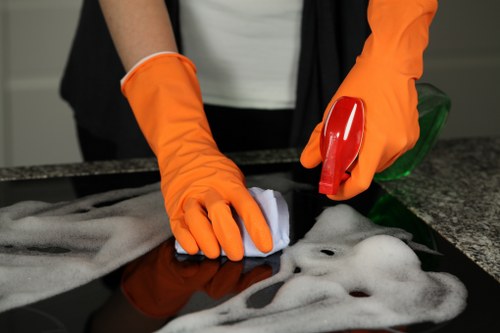
A reliable service should always start with an assessment. This is important because no two floors are identical, even if they look similar at first glance. A laminated wood effect surface is not treated like real timber. A textured tile floor may need different tools from a smooth polished stone floor. This initial check helps identify the safest and most effective method.
The next stage is usually dry soil removal. Loose dust, grit, crumbs, and other debris are removed before any wet cleaning begins. This step matters because it prevents particles from being dragged across the surface during the wash stage. For many SE13 homes and businesses, this alone can make a noticeable difference, especially in entrances and high-traffic corridors.
After that, the floor is treated with appropriate cleaning products and agitation equipment. The exact method depends on the floor type. Some surfaces are scrubbed with rotary machines or scrubber-dryers; others are cleaned more lightly with microfibre systems, controlled moisture, or specialist pads. Where necessary, grout lines, edges, corners, and hard-to-reach places are given extra attention.
What a careful technician will look for
Before, during, and after the clean, a good technician will pay attention to:
- Existing scratches, chips, or cracks
- Signs of wear in entrances and walkways
- Soap, polish, or detergent buildup
- Staining from food, drinks, mud, or pets
- Whether the surface is sealed and how well that seal is performing
- Slip risk in wet or polished areas
That level of care helps ensure the result is not only cleaner, but also more suitable for day-to-day use.
Local property types and the challenges they create

SE13 has a mix of older homes, modern apartments, busy commercial premises, and shared properties. This matters because flooring in each setting faces different pressures. Period properties may have original tiles, decorative stone, or wood floors that need a careful touch. New-build flats often have practical flooring that looks neat but can still collect marks, dust, and detergent residue. Commercial settings may have safety flooring or polished finishes that need to look consistent across large areas.
One of the biggest local challenges is access. Some buildings have limited parking, controlled entry, narrow stairs, lifts, or shared hallways that require considerate planning. A local team can often work more smoothly because they understand the routine of the area and know how to prepare for practical issues such as loading equipment, coordinating access, or scheduling work to reduce disruption.
Another issue is footfall. In busy households, floors can be affected by children, pets, pushchairs, muddy shoes, and daily cooking spills. In businesses, the wear is even more concentrated around entrances, counters, service points, and passageways. Hard floor cleaning SE13 customers often want both a visible improvement and a finish that helps the floor stay cleaner for longer.
Examples of common floor concerns
- Dullness caused by repeated mopping with unsuitable products
- Black scuffs from shoes and furniture movement
- Staining in grout and textured surfaces
- Marks left by hard water, spills, or cleaning residue
- Uneven appearance in high-traffic zones
Why choose a local hard floor cleaning company
When you choose a local company for hard floor cleaning in SE13, you are usually choosing more than convenience. You are choosing a team that understands the area, the common property layouts, and the types of flooring found in local homes and workplaces. That can save time during the visit and can also help with planning the work in a way that suits your building.
A local service is also useful when you need flexibility. In residential properties, that might mean working around school runs, work schedules, or shared building access. In commercial premises, it could mean arriving before opening, after closing, or during a quieter period. A nearby team is often better placed to fit around those practical needs.
Local knowledge also matters when it comes to floor condition. Floors in high-use homes and businesses may need more than routine maintenance. They may need a proper deep clean because they have been treated with the wrong product for too long, or because years of use have caused a build-up that normal cleaning can no longer remove. A team experienced in local conditions can recommend the right next step without overselling unnecessary work.
Choose local if you want:
- A service that understands SE13 property types and access realities
- Cleaner scheduling around local household and business routines
- Practical advice on protecting the floor after cleaning
- A single point of service for homes, rentals, and business premises
Benefits of professional hard floor cleaning
Many customers begin by wanting the floor to look better, but the benefits usually go further than appearance. A deep clean can support hygiene, reduce grit and debris, and help extend the life of the surface. For landlords, letting agents, and property managers, this can make a difference when preparing a property for occupancy or maintaining communal areas. For households, it can make daily cleaning easier and more effective.
Another benefit is consistency. It is common for floors to look acceptable in the middle of a room but worn and patchy near entrances, under tables, and around kitchen units. Professional cleaning can even out this appearance, reducing dull patches and highlighting the natural finish of the material. If the floor has lost its original clarity, the improvement can be striking.
There is also a practical benefit in knowing that the floor has been treated correctly. Using the wrong product, too much water, or an unsuitable scrubber can create more problems than it solves. A trained technician will choose a method that respects the floor and avoids unnecessary stress on the material.
What customers often notice afterward
- A fresher overall appearance
- Less visible staining and scuffing
- Better texture and reduced buildup
- Easier routine mopping and upkeep
- A more professional impression for visitors or customers
What is included in a typical visit
Every property is different, so the exact service will depend on floor type and condition, but a standard visit usually includes a clear process from inspection through to finishing. The aim is to leave the floor clean, safe to use when dry, and in better condition for everyday life.
Common inclusions may be:
- Initial inspection of the flooring
- Identification of the floor material and finish
- Dry debris removal
- Targeted cleaning with suitable products
- Machine or manual agitation, where appropriate
- Attention to edges, corners, and traffic lanes
- Rinse or residue removal if needed
- Optional polishing or protective treatment on suitable floors
Some floors may need extra stages. For example, a heavily used vinyl floor might need a more intensive deep clean to remove accumulated layers. A stone floor may benefit from a specific care approach to protect its natural character. If a sealant is worn or absent, that may be discussed as a separate maintenance step.
Good service should always be tailored
No two floors should be treated the same way. A careful provider will explain the process in plain language and help you understand why one method is better than another. That is especially important if you are comparing options for a home, a rental property, or a customer-facing commercial space.
Preparation checklist before your appointment
Preparing the area in advance helps the clean go more smoothly and can reduce disruption on the day. It also helps the technician focus on the floor itself rather than spending valuable time moving items that could have been cleared ahead of time. For busy SE13 households and businesses, a little preparation can make a big difference.
Before the visit, it helps to:
- Remove small loose items, rugs, and floor mats if possible
- Move fragile objects, plants, and portable décor
- Clear the room of clutter where practical
- Make sure access routes are open
- Tell the team about any damaged, loose, or sensitive flooring
- Point out stains or areas of special concern
- Arrange parking or entry instructions in advance if needed
If you manage a shared property or business premises, it can also help to let occupants know when the work will happen, especially if the floor is in a hallway, reception, or entrance area. That reduces interruptions and makes the whole process feel more organised.
Tip: If you are unsure whether furniture should be moved, ask beforehand. Some items may be fine to leave in place, while others may need to be removed or shifted to allow access to the full floor surface.
Pricing factors and what affects the quote
Customers often want to know what influences the cost of hard floor cleaning. Exact prices are not listed here because every floor and property is different, but several practical factors usually affect the quote. Understanding these can help you compare services more confidently and avoid surprises.
Common pricing factors include:
- Floor size and total area to be cleaned
- Floor material and how delicate it is
- Level of soil, staining, and wear
- Whether deep cleaning, polishing, or sealing is needed
- How much furniture needs moving
- Access difficulties such as stairs, limited parking, or controlled entry
- Commercial timing requirements, such as out-of-hours work
In SE13, access can matter a lot. A ground-floor flat with easy entry is different from a top-floor apartment with narrow stairs, a shared hallway, and limited parking. A retail or office environment may also require careful scheduling so the cleaning does not disrupt trading or normal operations. A local team can often quote more accurately once the site and floor type are understood.
If you are gathering options, ask for a breakdown of what the service includes. That makes it easier to compare like for like and choose the right level of care for your space.
Residential hard floor cleaning in SE13
Homes in SE13 often have a mix of flooring types in different rooms. Kitchens and bathrooms may have tile or vinyl. Hallways may be wood or laminate. Living spaces may use stone, engineered wood, or luxury vinyl. Over time, these floors can collect marks in ways that regular household cleaning does not fully address.
Residential customers often ask for help with dull kitchen floors, scuffed hallway tiles, sticky residues, or bathroom surfaces that have lost their fresh look. In family homes, it is also common for pets and children to contribute to daily wear, meaning high-traffic zones become dirty faster than the rest of the home.
A professional clean can be especially useful before a special event, after renovation work, during a seasonal reset, or when moving into or out of a property. It can also be part of regular maintenance for people who simply want their home to feel cleaner, brighter, and easier to care for.
Ideal for:
- Owner-occupied homes
- Flats and maisonettes
- Rented properties
- House moves and pre-tenancy preparation
- Homes with pets, children, or heavy foot traffic
Commercial hard floor cleaning in SE13
Commercial premises have different needs from homes. Floors in workplaces and customer-facing settings must not only look good, but also remain practical, presentable, and appropriate for the daily level of use. In SE13, that can include retail units, offices, reception spaces, cafés, and other professional environments.
Commercial floor cleaning often focuses on consistency across large areas. Entrance points, walkways, tills, desks, and waiting areas can show wear first. If the flooring is safety flooring, vinyl, or tile, a professional clean can help maintain the neat appearance that staff and customers expect. For some businesses, a clean floor is also part of day-to-day presentation and basic site upkeep.
Flexible scheduling is often important. Work may need to happen before staff arrive, after opening hours, or at a quiet time to reduce disruption. A local team with experience in commercial settings can plan around those realities and keep the process efficient.
Common commercial requests
- Deep clean of customer areas
- Maintenance cleaning for entrance zones
- Floor recovery after renovation or refurbishment
- Routine care for vinyl, tile, or stone surfaces
- Periodic cleaning to support in-house cleaning teams
What areas around SE13 are usually covered
Customers looking for hard floor cleaning SE13 often want a provider that can handle properties across the wider local area, not just a single street or building type. The most useful service is one that can cover nearby residential and commercial locations while still keeping the work personal and practical.
Areas commonly associated with SE13 include parts of Lewisham, Hither Green, Ladywell, and neighbouring local districts. Properties near transport links, shopping streets, residential estates, and mixed-use developments may all benefit from the same kind of professional floor care, though the cleaning method will depend on the floor itself.
If your property is in or around SE13, it is worth asking whether the service can work around your location, your access needs, and your schedule. For many customers, that local flexibility is one of the biggest reasons to choose a nearby team rather than a one-size-fits-all approach.
Frequently asked questions
How often should hard floors be professionally cleaned?
It depends on traffic, floor type, and how the property is used. A busy commercial entrance may need more frequent care than a quiet residential room. Many customers book a deep clean when the floor starts to look dull or when regular mopping is no longer giving the desired result.
Can all hard floors be cleaned the same way?
No. Different materials respond differently to water, chemicals, agitation, and drying. Stone, timber, vinyl, laminate, and tile each need an approach that suits the surface. That is why an assessment before cleaning is important.
Will the floor be slippery after cleaning?
During the process, wet floors can be slippery, so appropriate care is needed. Once the floor has dried properly, it should return to normal use. If polishing or a treatment has been applied, the technician should explain any temporary precautions.
Do I need to move furniture first?
Sometimes yes, sometimes no. Small loose items are usually best removed in advance. Larger furniture may be discussed beforehand depending on the floor type, access, and the area to be cleaned. It is always worth checking in advance so the job can be planned properly.
Can you help with stained grout or dull tile lines?
Yes, in many cases. Grout and textured surfaces often trap dirt more than the tile itself. A targeted deep clean can improve their appearance, although very old staining or damage may not disappear completely.
Is this service suitable for landlords and agents?
Yes. Hard floor care is often requested for end-of-tenancy preparation, pre-let refreshes, and communal areas. It can help improve presentation before viewings, inspections, or new occupancy.
When to request a quote
If your floor is looking worn, dull, or marked, it is usually a good time to ask for an assessment. You do not need to wait until the problem becomes severe. In fact, early attention can sometimes prevent further buildup and make the cleaning more straightforward.
You may want to request a free quote if:
- The floor no longer responds well to standard cleaning
- There are visible scuffs, stains, or dull patches
- You are preparing a property for sale, rental, or reopening
- You manage a shared or customer-facing space
- You want to improve hygiene and appearance at the same time
- You need a local team that can work around access or timing restrictions
Contact us today if you are ready to talk through your flooring needs. Whether you need a one-off deep clean or a regular maintenance visit, booking a professional service can be a practical way to protect your floors and improve the look of your property.
Choosing the right floor care approach
The best floor cleaning result comes from matching the method to the material, the condition, and the purpose of the space. A family kitchen, a rental hallway, a retail entrance, and a reception area all have different demands. The right service will take those into account rather than treating every floor as if it were the same.
When comparing options, look for clarity about what is included, how the floor will be treated, and what kind of result is realistic for the condition of the surface. A trustworthy local service will explain what can be improved, what might need additional maintenance, and how to care for the floor afterward.
For SE13 customers, that local understanding matters. It helps ensure the work fits your property, your schedule, and your expectations. If you want a cleaner, smarter floor without guesswork, a professional hard floor service is a sensible place to start.
Ready to make a start? Book your service now or request a free quote and arrange a time that works for your home or business.